
Strategic Vision Mapping: What You Need To Know



Why Your Startup Needs a One-Page Vision Map
TL;DR: Most founders struggle to keep their team, board, and customers aligned on where the company is headed, and this post breaks down a one-page framework to fix that.
A vision map answers eight questions in order, from why you exist to how you'll get there, so the whole strategy fits on one page.
The same map can exist in different depths: full detail for your board, a thinner version for your team, and something simple for customers.
Includes a free worksheet to build your own strategic vision map, plus how to get more support from Beal Consulting.
The Importance of a Clear Vision Map
Ask three people on your team where the company is headed, and you'll probably get three different answers. Not because anyone's confused on purpose, but because most founders never write the vision down in a way that a board member, a new hire, and a customer could all actually use.
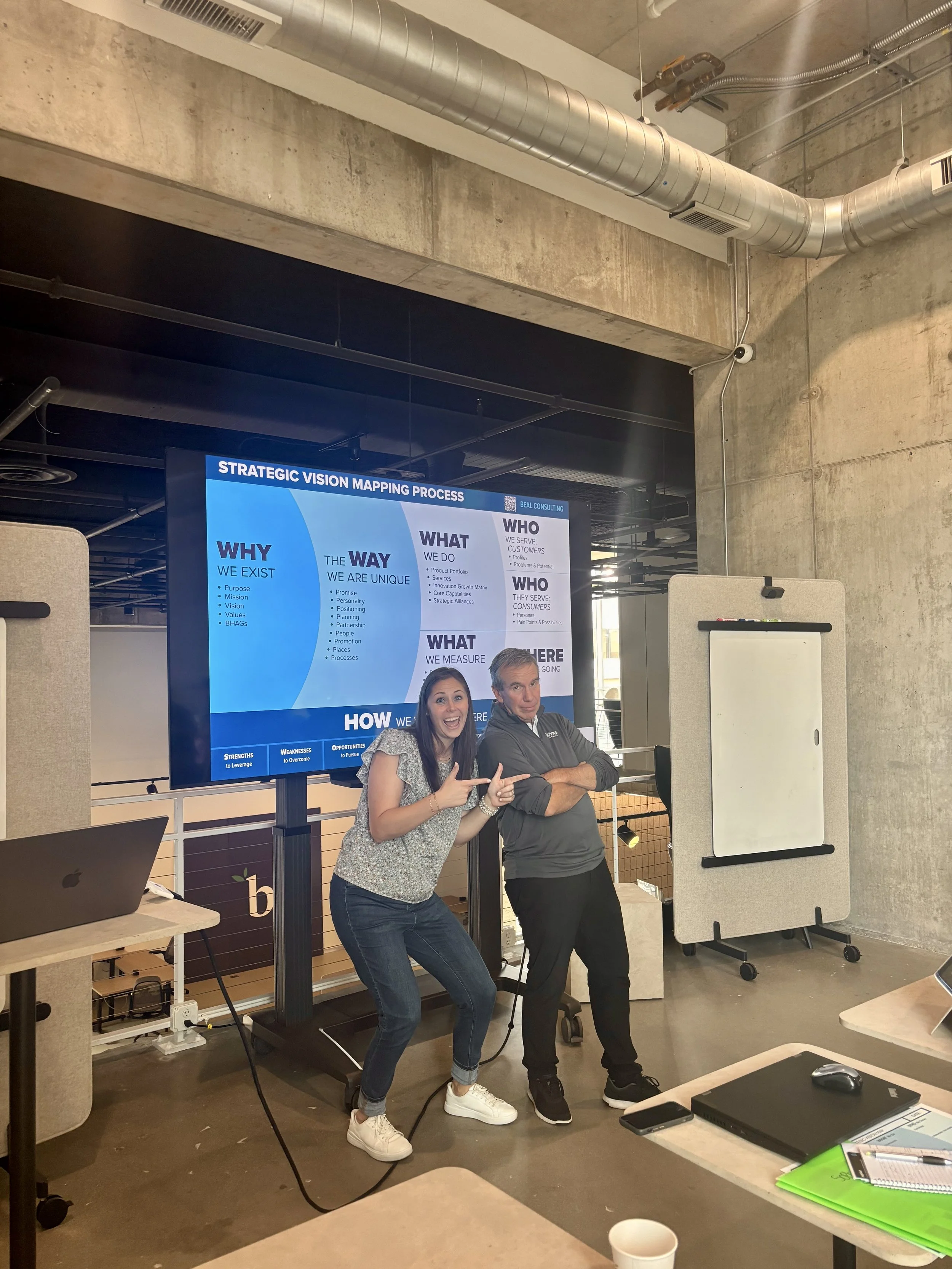
That's the problem Dayna Beal of Beal Consulting tackled at last week's Strategic Vision Mapping workshop, hosted at Startup Garage. His answer: stop building slide decks. Build a map instead, and keep it to one page.
A clear, one-page vision allows you to communicate the same strategy no matter the audience. Whether its your board, your team or your customers, this framework provides language they can act on, and that shared clarity is what turns a good idea into a larger impact.
Start From Why, Then Work From There
A vision map is built in layers, starting at the why and then working out: why you exist, what makes you different, what you actually do, how you measure success, who you serve, and where you're headed. Each layer answers one question, in order, and each one builds on the layer before it.
Skip straight to "what we do" and you're just describing a product. Start at "why we exist," and everything after it, your offer, your audience, your plan, actually holds together.
The Eight Questions Worth Answering
Dayna walked the room through eight questions, moving from the center of the map outward. Working through them in order, on paper, is the exercise itself. The questions below are what need to be answered in order to get to your vision. Answering them in order helps to establish a vision that is clear and consistent.
Why do we exist?
In what way(s) are we unique?
What do we do?
What do we measure?
Who do we serve?
Who do they serve?
Where are we going?
How will we get there?
Answer these in order, and you end up with a strategy your whole team can actually hold in their heads, instead of a plan that lives in a document nobody reopens.
One Map, Several Versions
One idea that Dayna emphasized during the Strategic Vision Mapping Workshop was that you don't hand everyone the same version. Individuals such as your board members and investors get the full map, with goals, tradeoffs, and the operating model laid out. Your team would get a thinner version built around mission and direction; they don’t need to know every detail on how you are getting there. And then customers would get something simpler still, usually just the "why" and the "what," told as a story.
It ends up being the same map, same DNA, but with a different depth depending on who's reading it.
Try It Yourself
We put together a free worksheet that walks through all eight questions, along with Dayna's original vision map template, so you can build yours on paper before you try to explain it out loud.
Download the worksheet and give it thirty focused minutes. If you want Dayna to walk you through the process in person, or a more complete version of the template, you can reach out to Beal Consulting or visit strategicvisionmapping.com.
Your vision map won't be perfect the first time you write it, and that's fine. It's a first draft, not a final answer, and it'll change as your business does. What matters is that everyone, from your board to your newest hire, is finally reading from the same page.
