
Founder Feature: Amy Stratbucker
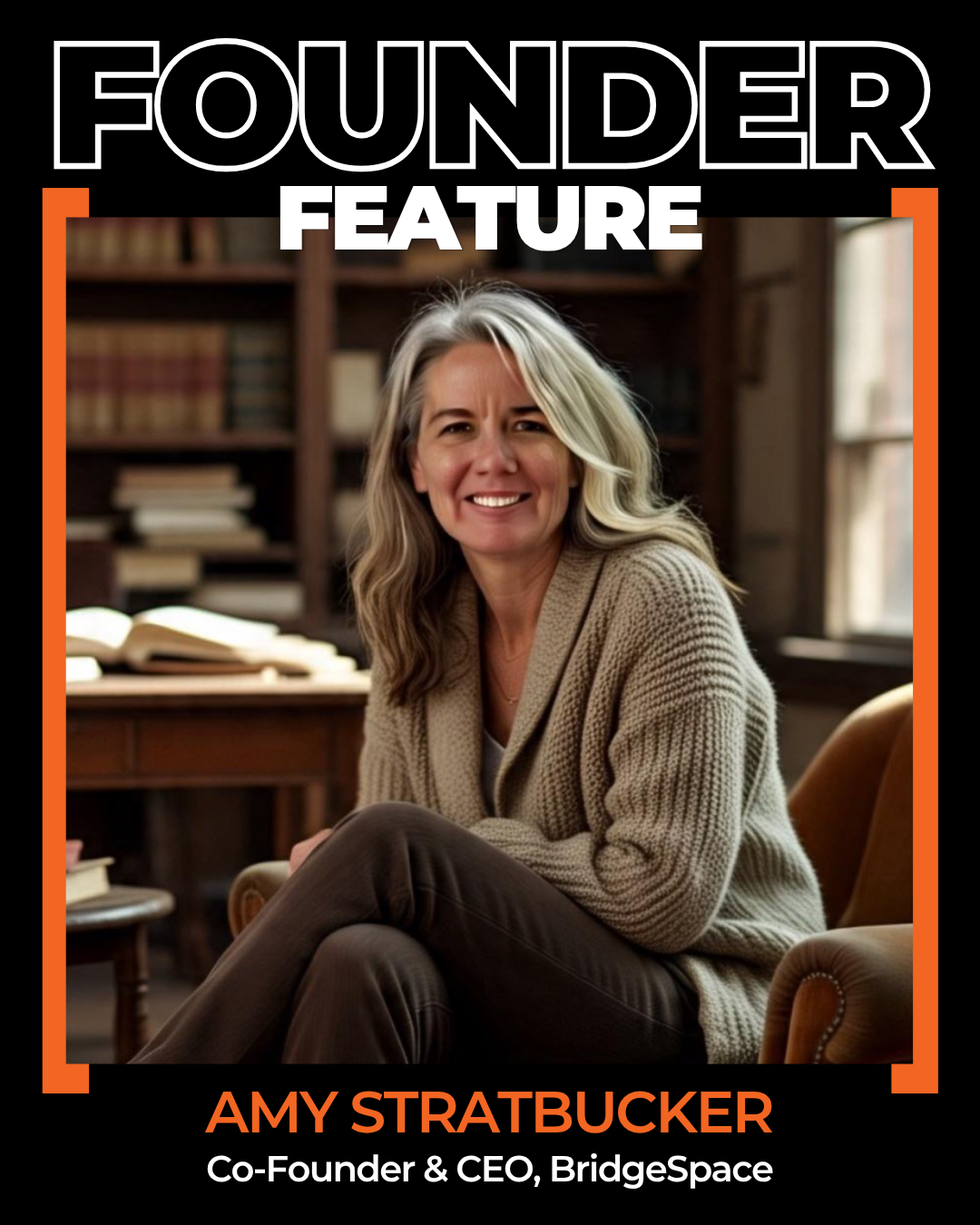
Amy Stratbucker: Building AI That Helps Kids Feel Seen
Amy Stratbucker leads with a combination you don't often see paired together: technical care and emotional intelligence.
As co-founder and CEO of BridgeSpace, she's building an emotionally intelligent AI platform that helps neurodivergent children practice real-world conversations and explore emotions with confidence - work that sits at the intersection of technology most founders treat as purely functional, and a kind of care most founders never touch at all.
A Tool That Extends the Room, Not Replaces It
Alongside co-founder Daniel Hungerford, Amy built BridgeSpace as something that lives outside the therapy room, not instead of it. It gives kids a safe, low-pressure space to build the social and emotional skills that carry into everyday life - practicing the kinds of conversations that can feel high-stakes for a neurodivergent child, without the pressure of getting it right in front of a real person the first time. It's designed to extend what's already happening in a child's life, not replace the therapists and relationships already supporting them.
That distinction matters. It would be easy to build a tool that promises to solve something AI shouldn't try to solve alone. Amy and Daniel built something more honest: a practice space, not a substitute for the humans already doing the real work.
The Background Behind the Build
Amy's path to BridgeSpace runs through leadership development and consulting: work that trained her to see both the systems and the people inside them. That combination shows up in how she leads now: with a rare mix of technical rigor and genuine emotional intelligence, grounded in her faith and a real desire to help kids feel seen, heard, and equipped to connect.
It's not a common resume for an AI founder. It's exactly the resume you'd want for one building something this close to a child's inner world.
One Child, One Conversation at a Time
Amy's hope for BridgeSpace is simple, even if the technology behind it isn't: leave the world a little better, one child and one conversation at a time. It's a small-sounding goal for a company built on AI - but it's also the kind of goal that keeps a founder honest about who the work is actually for.
